This is a personal blog of a professional 3D Artist from the moment I picked up a 3D program to present time. It contains my interests in games and my modelling practice, mixed in with things that I have found interesting over my time writing on it. I pride myself with being able to put myself into my writing so don't be too shocked if you see some of my own twists on making points here too.
Just a quick update on my Tiger stowage bin progression. Its completion has been a little show this week as I have been taking it a little easier with my late night working. I made a bit of a mistake which wasted a bit of time on but ill let you know about that as I go through this post.
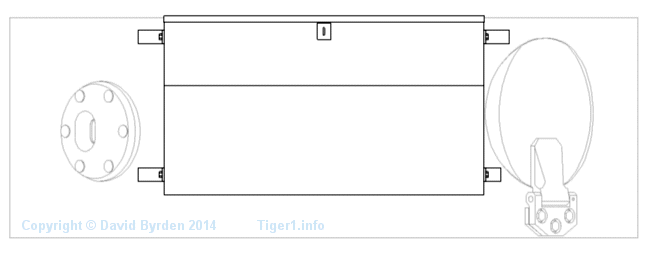
This week I have been modelling the lock mechanism for the stowage bins that currently exists on the Tiger 131. Its not been easy to get some decent close up reference of the locks. I recently bought the Haynes Tiger Tank maunal. This book Just happened to have the image I needed so that was a massive stroke of luck.
I have found it a fascinating read and for the price of around £10 good bargain as well. The book talks about the design choices made, design specification changes throughout the various model designs and different concepts this tank went through before the final design that recognise today came to fruition. The book also covers the Tiger war developmental changes during the war and following tank conversions such as the almost ludicrously armed Sturmmorser Tiger.
The Sturmmorser Tiger Sporting the 38cm RW61 Rocket Assisted Morter
I mentioned I made a error whilst doing the clip and lock for the Stowage Box. Whilst doing the Lock I decided to do as a complete mesh rather than splitting away the geometry as separate elements.
After finishing my first lock I realised that to save on the over all poly count (and have nicer geometry) it would be more efficient to split off the problematic geometry. I remodelled the Lock again as separate parts and here was the results
Non Smoothed Geometry (first model on the right new one on the left)
Turbo Smoothed Geometry
I don't know what I was thinking when I decided to try do it in one mesh but as you can see from the pictures, splitting the object up is so much more efficient and neater.
With the lock modelled I went ahead with the latch that it attaches onto the Stowage bin.
This brings me up to my current work in progress level. I still have a bit more to do, adding welds and positioning some of the metal brackets. Hopefully I'll be moving towards for front of the turret with the distinctive mantlet and gun of the Tiger in the coming weeks. I hope you all have a good weekend and I'll see you here next week.
Welcome back for another ship review on my Blog. Things over the last 2 weeks have been a little crazy with Berlin and also with going south to Lands End (in Cornwall, UK) on a last minute trip. Needless to say I haven't had a huge amount of time for gaming these past 2 weeks but what I have saved for this week is a ridiculously good tier 3 Cruiser that throughout the closed beta I had a fair amount of fun playing.
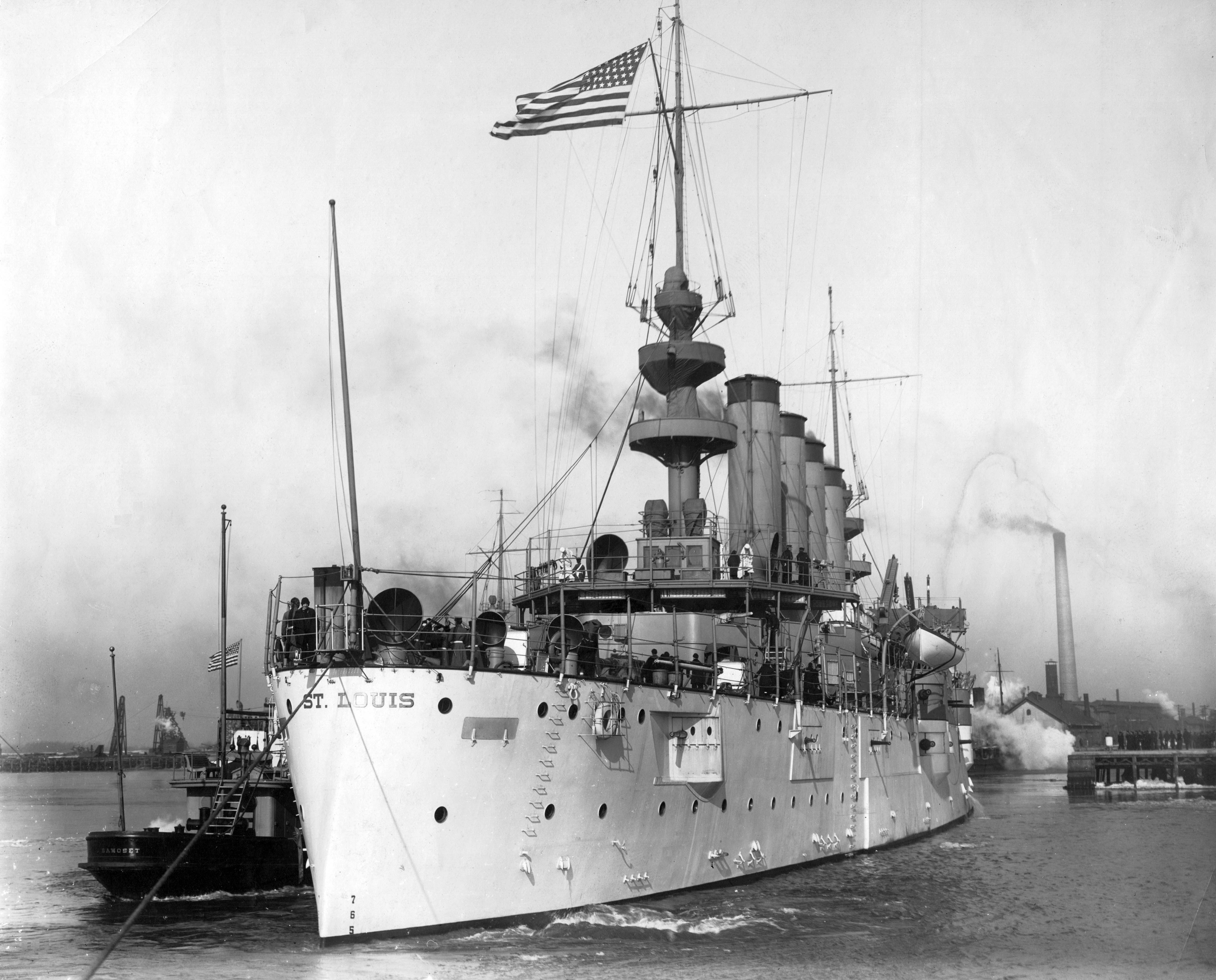
All the way through the closed beta, every player that I talked to loved this ship and many came to the conclusion that they would be keeping a harbour slot ready for it when the open beta went live. This ship is of course the USS St. Louis. When fully upgraded this little power house sports 14 rapid firing guns that would give butterflies to even the hardiest of American redneck's. The St. Louis is equipped with ample amount of armour so can be a real pain in the ass to kill without taking large amounts of damage in return.
To see just how typically American this ship is you only have to look down the length of its port and starboard sides to see multiple barrels poking their way out of the hull. This ship pretty much sets the standard for all American cruisers to come. Where the focus of Japanese cruisers is a mixture of guns and Torpedoes the American cruisers do away with any distractions and focus on high DPM Guns.
The St. Louis and The Cleveland are pretty much indicative of this characteristic in the lower tier game play and demand respect from all opposing players that encounter them. Needless to say that these 2 cruisers will be common place in all good captains harbours in World of Warships as they are so much fun to play.
Historically in real life the USS St. Louis (C-20) had a pretty unremarkable service history. The St. Louis was launched in 1907 after sea trials to the Pacific Fleet. During her design phase the consensus was made for improvements on the existing Columbia class cruiser design to which she would be based upon. The decision was made up the armour her hull in comparison to other Columbia class cruisers, increasing her displacement from 6000 tons to 9700 Tons. This made the St. Louis a fully fledged protected Cruiser. With all the extra armour that was fitted to the cruiser and in a bid to save weight, the St. Louis was fitted with 6 inch guns rather than the standard 8 inch. A larger power plant was also needed in the ship to counteract the extra weight from the added armour.
Throughout the St. Louis's service life there was only one point of note but this didn't really involve the ship but more the crew that manned her. On the 4th of Feb 1917 the crew stopped the scuttling of a interned German Sloop Geier by boarding with an armed party. The Geier was captured before her planned scuttling and ended up serving the United states under the new name of the Schurz. The St. Louis was mostly consigned to transporting goods and convoy escorts other than this singular event. The St. Louis was eventually decommissioned and scrapped in 1930.
In World of Warships this is a stonkingly good tier 3 cruiser. This ship is literally crapping guns with fourteen 152 mm guns with a secondary armament of eighteen 76.2 mm guns. On a tier 3 Cruiser this ship even can hold its own against battleships of equal tiers. Having so many rapid firing guns makes this ship a real threat for destroyers and other cruisers. The St. Louis has almost 30K of hit points and is very heavily armoured for a cruiser. This means you can weather a fair old chunk of punishment before going down swinging. When compared to the Japanese T3 Cruiser you can really see this amplified when the Tenryu has a mere 17.7 K HP.
Having 6 guns on both the port and starboard sides of the ship and one rotating turret in both the fore and aft of the ship. This means with additional 2 guns that can rotate 180 degrees on the deck you can have a maximum potential 8 guns on target when firing a full broad side. Due to the positioning of the guns facing directly outwards from the ship you won't have to wait for your turrets to turn when changing directions. You will always have some guns on target if you get surprised by the enemy or if you have to switch targets.
With all these great advantages there has to be some disadvantages that stem from its historical design choices that favoured many guns and large amounts of armour. All this extra weight ladened on a cruiser makes the St. Louis suffers most in its speed and rudder shift time. Torpedoes will be your biggest nightmare as the St. Louis drives very similar to a skip and doesn't respond well to sudden threats. The gun range isn't great either at 10km, presenting the danger that many ships can use their speed and range to keep you at a distance where by shoot you without you being able to respond in kind. Not many players will be wise enough to realise this at tier 3 and will generally close to shorter ranges where they can actually hit you. This will be playing into your hands and the strengths of your ship especially if they close into your secondary range adding to your ginormous gun array.
One thing to note with the St. Louis is it doesn't have a great concealment range so being careful with your approach using some cover in the initial stages of the match is best advised. Most Battleship captains will always choose to shoot at a cruiser they know they can get big numbers of damage from over another opposing well armoured battleship.
In conclusion with this ship, the key to your success in this ship is to simply keep the guns singing. You have lots of them so use your main strength as much as you can. This is a strong cruiser for its tier but its still a cruiser and charging into to many enemies will normally get you focused down even if you can put up a fight. When facing off against torpedo baring ships try to predict when they will be firing their torpedoes and start your evasive turns early. The speed and rudder shift time are terrible on this ship but the turning circle is good. Reacting early in these dangerous situations will help you survive. Doing aggressive manoeuvres in other ships tends to leave you having to turn turrets around to defend yourself but with the gun arrangement in the St. Louis you can fire continuously and cause your enemy to retreat under a withering hail of fire.
The characteristics of captaining the St. Louis feels very similar to the HMS Warspite with her fairly slow speed, good armour, slow rudder shift time and good turning circle. Not to mention they both have fantastic armaments. If you find yourself getting on with the St. Louis I would highly recommend looking at the Warspite. As you can see below you can get great results from the Warspite once captained properly.
Until later in the week take care and I'll see you back here soon.
This week I want to show you where I am at with my Tiger Tank. I have been looking at the Stowage bin that typically was seated on the back for the Turret.
Tiger 131 Getting Some Maintenance
I referred to my usual places to get some sources to get dimensions, measurements and source imagery for reference. Having done some digging I found that there was a few positions that Tiger Stowage bins were placed other than the typical back of turret arrangement that many will be familiar with. They also differed in shape similar to that of panzer 3 Stowage bins.
The Standard Back Bin Arrangement
Late Turret With Typical Back Stowage Bin
Some of the Stowage bins like the Bin that was attached to the s.Pz.Abt.502 Tiger companies didn't have the bowed out design like what is on the 131 Tiger. It was a single lid design that had parallel sides.
Early Turret Bin Designs Used by the s.Pz.Abt.502 Tank Companies.
There was also a wide bin arrangement that was the first design for a turret bin on the Tiger which was quickly made obsolete by covering over new port and hatch designs. The bins were attached to Some of the early Tigers that were shipped to Africa in November 1942.
First Stowage Bin
There were also side Bin designs such as shown in the picture of the tiger tank on parade in the picture below.
Side Bin Arrangement
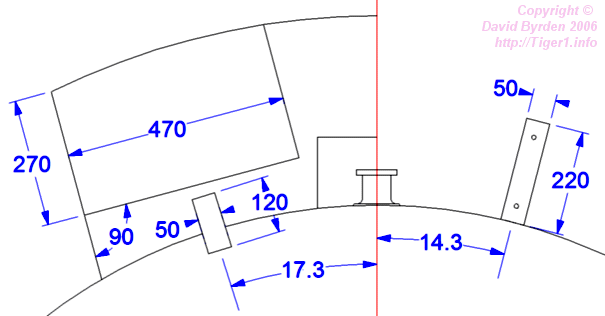
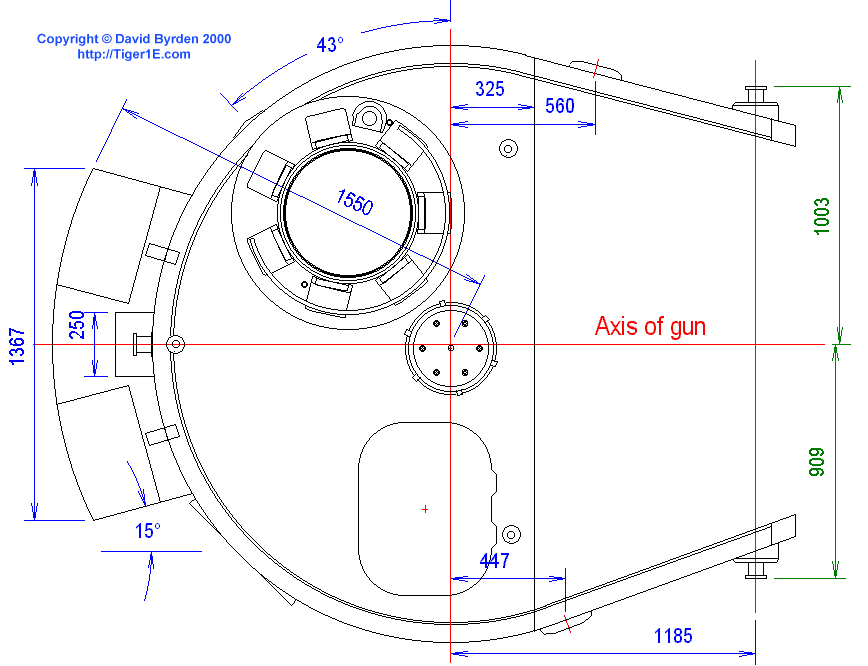
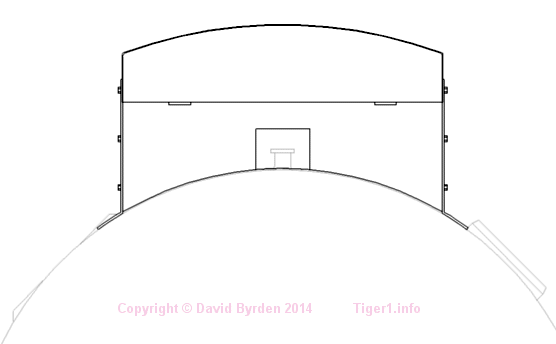
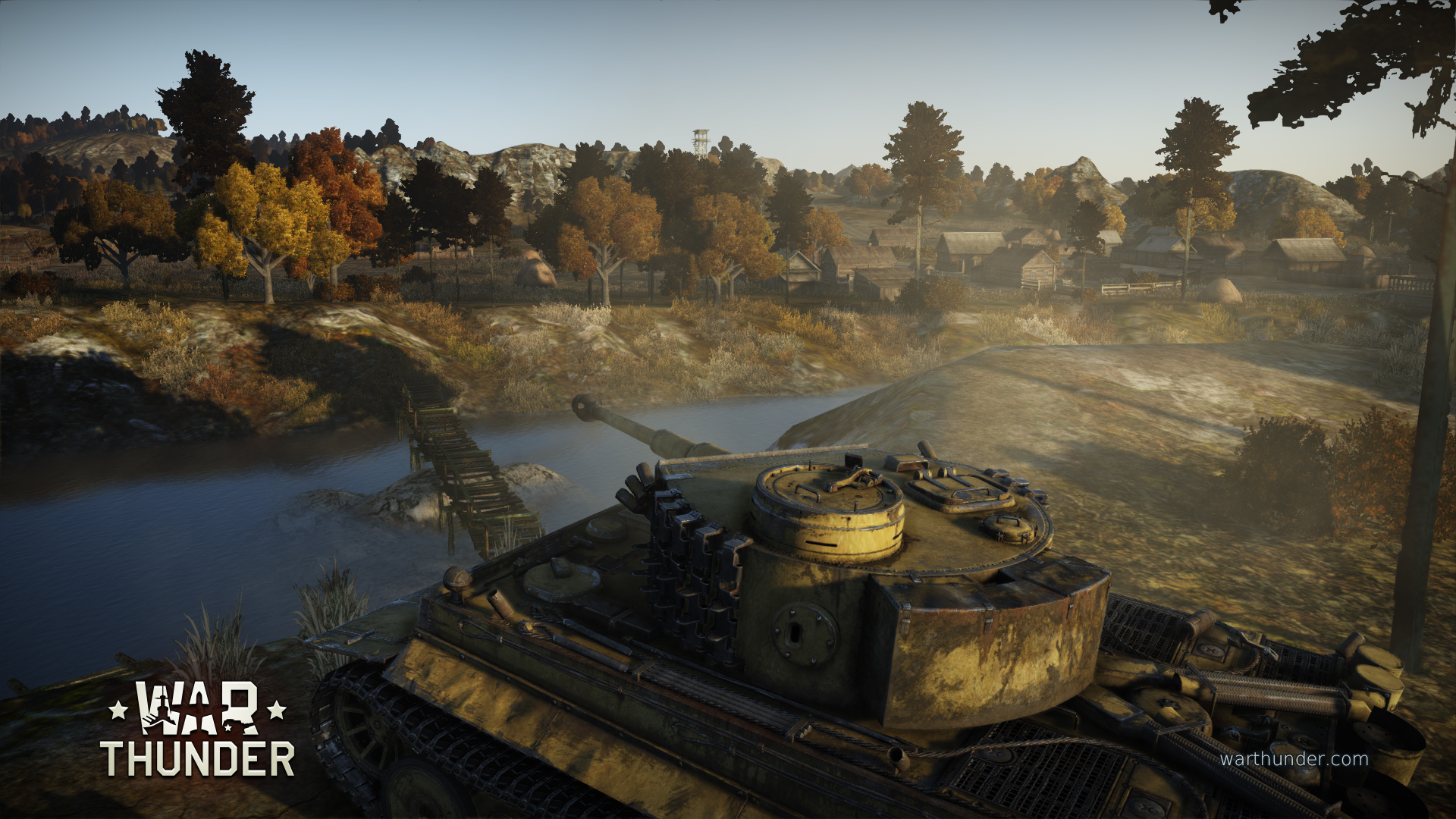
For my Stowage bin I am looking at the same design as is currently on the Tiger 131. This is the standard rear stowage storage bin that is recognised as the stereotypical design on the tigers turret. Its design is featured in World of Tanks and War Thunder ground forces also.
World of Tanks Tiger
War Thunder Tiger
I still have more work to do on it bin, such as weld lines, clips and locks for the lid covers. I also have to clean up the geometry to get a cleaner curve but you can see the direction in which the model is going before I marry it up with the rest of my turret. I'm away this weekend again in Penzance on the southern part of the UK so I wont be finishing this off this weekend but will probably get this finished mid next week. I have pans there on to start on details at the front of the Turret getting the mantlet and 88 guns modelled. I have been leaving these till last as I think they will be the most fun to model out of the Turret so far.
That's all for this week! I hope you all have a great weekend and make the most of the nice weather that seems to be happening throughout the whole of Europe.
Over this weekend Wargaming Net has done a server reset for the closed beta of World of Warships so all of my progress thus far has been wiped. This means I'll have to work up the tiers again to do some more ship reviews. I like to have played the review ship for a while to get a feeling for its play style to give a better overall impression of the ships characteristics. This means this week I won't be doing a ship review this week due to the wipe so I have some time to build up my harbour again. Due to this I will probably be focusing a little more on some lower tiered ships next wee (also because that's all I will have =D ). As with all early access games you have to expect this type of thing to help the developer make the best end product they can.
As I mentioned in a earlier post I have been away to Berlin and paid a visit to the German Museum of Technology, so I thought it would be rude of me not to share with you what I saw there.
One of the most reliable work horses of its time the Douglas Skytrain
The German Museum of Technology, located in Kreuzberg, Berlin, houses a vast array of different advances from some of the first computers, radios, televisions, printing practices and many more technological items. The main reason I visited the technology museum was to see the collection of war planes that they had in their upper floors.
This didn't mean that the museum didn't have some other things to find in it I thought would be worth showing. Whilst going through the Maritime section I found to my surprise a small sub and a early torpedo. They were both in pretty bad shape as you can see in from the photos but its crazy to think that sailors fought in such tight spaces.
Small Sub and Torpedo
Mig-15bis
North American Fiat F-86K
V1 Buzz Bomb
One of the main attractions of the air sections are some of the German Luftwaffe's most prestigious aircraft the Bf 109, the BF 110 and the first generation Jet (or more rocket plane) fighter the He 162.
He 162
Bf 109
Me 110
There was also a very wrecked JU 87
Totalled Ju 87 with many a bullet/cannon hole
It was definitely a well deserved break for both me and my girlfriend. Berlin was a amazing city of culture art and history where the population was hugely warm and welcoming. I would highly recommend visiting the East Side Gallery, The Brandenburg Gate and the Reichstag building. The Jewish Holocaust memorial is a spell binding undulating mass of stone columns that seem to envelop you the more you explore their towering masses. It is something all people that are passing through Berlin should visit and pay their respects to the millions of lives lost to the Nazi Genocide.
I hope to see you all back here for my late week post on my tiger as I am busy building the Stowage Box for the back of the turret.
By the time you are getting this it will be Wednesday and I will be enjoying a well deserved break in Berlin, Germany with my wonderful girlfriend. As there will only be one post this week due to my holiday so I hope you make the most of it & enjoy it!
This week I will be looking at a one of my most loved ships in my harbour, the Hatsuharu Tier 7 Japanese Destroyer. This is the first Destroyer in the Japanese line to get the Type 93 Long Lance Torpedoes. This 610mm Type 93 is a massive step up from the from the previous tiers 5-6 in damage. These Torpedoes are fast, have a long range and a hard punch with a base alpha damage of over 17 k.
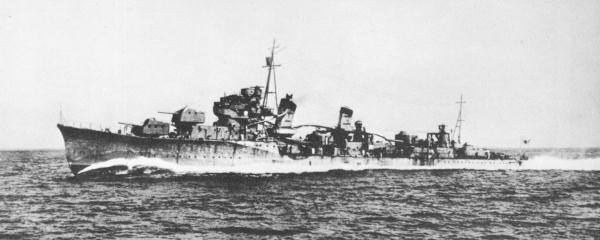
The Hatsuharu Class Destroyer
The Hatsuharu class destroyer was built at the beginning of the 1930's. At this time the Imperial Navy's ship developments were limited by the London Navy Treaty.The design limitations imposed by the treaty meant that the Hatsuharu was smaller than previous Fubuki and Akatsuki class Destroyers that had come before her previously. It also limited designs for the Hatsuharu to a displacement of 1500 tons. The designers had to stretch the contemporary destroyer design to its limit whilst still trying to arm the new destroyer design with almost equally powerful armaments of its earlier classes. This causes severe stability problems due to the ships smaller hull and displacement. The resulting top heavy designs created worrying structural weaknesses, not just the Hatsuharu but many of the ships of this treaty's era. These structural design flaws were fatally highlighted when the torpedo boat Tomozuru capsized in 1934 and a typhoon ripped the bows of two Fubuki class destroyers in 1935. As a result of these 'incidences', all the Hatsuharu class vessels went through a major rebuild or were extensively modified to remedy their stability problems.
So Pretty Yet so Dangerous
Suffering stability problems for weaponry caused a lot of issues but Hatsuharu but it was able to hold its own in a fight. It used the same calibre 50 type 3 naval guns (12.7cm) as its Fubuki class predecessor however its guns could serve as dual purpose anti air as well anti ship with having a 75 degree elevation. An additional two 40mm AA guns also served as closer range air deterrence if the need presented itself. The 2 Triple 61cm torpedo launchers could do a full 360 degree turn in around twenty five seconds thanks to its electro hydraulic system and each emptied launcher tube could be quickly reloaded with the use of a mechanical wired system (Kiryoku sōtenshiki jihatsu sōten sochi) in around 23 seconds (I wish it was like this in world of warships).
During the second world war The Hatsuharu class destroyers saw action in the Battle of Midway, battle of Kolombangara and even escorted the mighty Yamato on her final Operation tengo. In the Battle of Kolmbangara the 'Yugure' Hatsuharu class destroyer assisted in the sinking off USS Gwin and the damaging of HMNZS Achilles, USS Honolulu and USS St. Louis. All the Hatsuharu class destroyers in service were eventually sunk in different conflicts throughout the second world war either by air bombings, submarine torpedoes or by mines.
In World of Warship this destroyer really enters the Japanese Destroyers into the arena of versatile long range strikes. The speed of the torpedoes mixed with its range their 10 km range has surprised many a ship I had been stalking whilst captaining this ship. The Hatsuharu gains a larger surface detectability range of 6.7km but still maintains a comfortable 3 km safe area in which to launch surprise attacks from without ever being spotted.
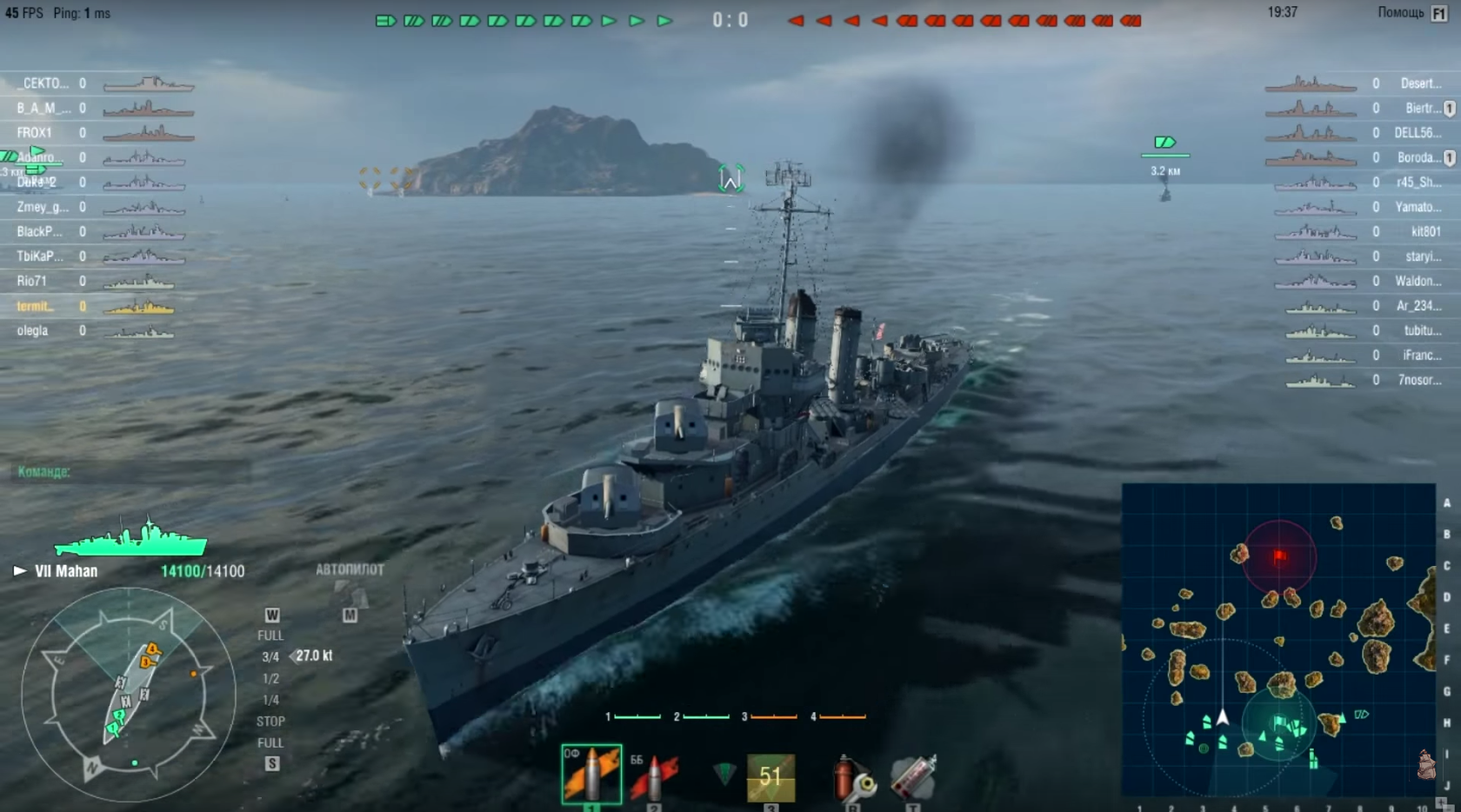
Like most Japanese destroyers the guns are pretty unremarkable being of smaller number and a with slower rotation speed than their American counterparts. At Tier 7 The American Mahan is a pretty poor destroyer in comparison to the Hatuharu. Its guns have a longer range and quicker rotation speed but has exceptionally poor ranged torpedoes (the worst in the game at 4.5km un-upgraded and 6.4 km upgraded). A Mahan has a surface detectability of almost 8 km so has to sail well within secondary range of most battleships to be effective. Unsurprisingly the Mahan has been given more health than the Harauhatsu to take a little extra punishment but its still a destroyer and won't last long under sustained punishment. Battleship weaponry seems to get a lot more accurate when firing at targets between 12 and 6 km so puts the Mahan at a distinct disadvantage when engaging larger ships.
The guns are not as painful to use as previous tiers of Japanese destroyers having around half the turret rotation speed of the Minekazi & Mitsuki (45 seconds on these ship where the Hatsuharu has a 25 secs for 180 degrees). This welcome change lends towards more versatile play for Japanese destroyers where guns actually might be a viable option in some most scenarios. As the Hatsuharu has similar sized guns to the Mahan the American has to rely on its main advantage of faster firing guns to get it out of trouble. Being able to spot and outrun the Mahan whilst maintaining stealth gives the Hatsuharu the advantage as a destroyer to react and avoid a close up brawls. Forcing American destroyers to take up chase limits their fire which takes their gun advantage away from them. Maintain a decent distance using your higher speed, whilst drive them back by your firing guns (which will be novel for most Japanese destroyer player) and torpedoes. This is normally enough to deter even the most dogged of attackers after setting them on fire a few times and causing them to take evasive manoeuvres dodging incoming torpedoes.
The Mahan Tier 7 American Destroyer
I like the Hatuharu. I have to admit when sailing the T6 Mitsuki I found it hard to adjust my playstyle for that ship. The Minekaze was a great little destroyer and I felt the Mitsuki was a bit of a let down. This made me think about what impact the future changes in the heavier higher levelled destroyers would effect my play. I am happy to say that the Hatsuharu is much more fun to captain than the Mitsuki and I have begun to see high amounts of damage rack up in most of my games. I find its balance of power, speed and stealth really aids my approach to the battlefield which works well as a fast paced doom bringing machine. I would definitely recommend this ship for anyone that loves that hard hitting potential only destroyers can give.
Hatsuharu Doom Attack
I hope this review has helped you make a decision on whether you would like to take up Japanese destroyers and would love to hear your feed back. Till Next time.